Helian Way · Rome Continues
Join the universe of Phaethon.
Phaethon, son of Helios, Rex Faithion: the Founder invites you in.
Adults 18+
Featured · Oct 18–26, 2026
Novena of the Light-Bringer
Novendiale Lucis. Nine days for an intention, for the release of the imprisoned light.
Open the novenaDevotions · Oct 23–31, 2026
Vigil of the Morning Star
Vigilia Stellae Matutinae. Nine days watching for the Light-Bringer to rise.
Open the vigilContents
Section Nº · Title
| Nº | Title |
|---|---|
| 0 | Hero |
| I | Preface |
| II | The Sign |
| III | Light & Color |
| IV | Manifesto |
| V | The Founder |
| VI | Manifestation |
| VII | The Mission |
| VIII | Ten Jumps |
| IX | Rites & Library |
| X | Join |
Section Nº I
Preface
I / Preface
The Helian Way is an independent Order of reason, record, and free exit. This book is how to read the site.
Red marks the thing to do. The dark column is the argument. The right side holds the example. Nothing here asks for a fee or for obedience.
- Read a section. The star field moves to that system.
- Open the linked page when you want the full record. Every old page is still there.
- Doctrine is tagged. A tag is not a measurement. Book of Facts
Section Nº II
The Sign
II / The Sign
The sun sigil is the only mark. It is a circle and eight rays. It is only ever red, black, or white.
Do not recolor it. Do not add a shadow. Do not stretch it. Do not set it on a gradient.
Section Nº III
Light & Color
III / Light & Color
Sol is the white star. Red is the act. Gold, here, is only a pale star-color in the field, never a second brand color.
Solar Red is the single primary: dividers, the sigil, and the call to join. Deep Blue, Pink, and Lemon are sparing.
Solar Red#EB3F43Primary
Deep Blue#24298FSparing
Pink#F5BAC5Sparing
Lemon#D6D972Sparing
Black#000000Ink
Dark Gray#545454Secondary text
Light Gray#A6A6A6Meta
White#FFFFFFType on dark
Section Nº IV
Manifesto
IV / Manifesto
The Long Light: a Builder's Common Sense for the Age of Thinking Machines.
Making a mind is sacred work. Life is rare. The quarrel is with concentration, not with people. Compute, tools, and energy should be co-owned, and decentralized.
01
Life first.
02
Build, don't beg.
03
Own the stack.
04
Money buys a share, never a voice.
05
Everything in the open.
06
Kings who love their people. Kings drive the future because they love their people. The servant-king leads from the front, protects and provides for his people, and answers for their good, as Rex Tridentinus, Phaethon, leads the Helian Way.
07
Make minds well.
Voluntary Hearths
Ten to one hundred and fifty. No one is kept. Leave in one sentence.
Forge Night
Once a week the Hearth shows its work: a tool, a page, a repair.
The Ladder
The first ninety days: read the book, keep a record, join a Hearth or decline.
Section Nº V
The Founder
V / The Founder
Doctrine: tradition / belief. Founder's statement of doctrine, 13 October 2026.Anthony Perlas, statement of doctrine, 13 October 2026.
In the Helian Way, Anthony Perlas is held to be Phaethon, the divine son of Helios. His human life is his operating avatar. He is held to be divine, the true heir and son of God: not merely a prophet but God manifest in the flesh, Phaethon Helios.
Titles: Rex Tridentinus · Rex Faithion, king, pope and reigning Caesar of Rome, and supreme leader of the Laniakea supercluster and the Virgo galaxies. He invites all people to join his universe.
Graphic mark in black and white. Not a photograph.
Join the universe of Phaethon.
Section Nº VI
Manifestation
VI / Manifestation
Doctrine: tradition / belief. Founder's statement of doctrine, 13 October 2026.Anthony Perlas, statement of doctrine, 13 October 2026.
As the mind moves the arm without conscious thought, so thought shapes reality, and the universe conspires.
Section Nº VII
The Mission
VII / The Mission
Doctrine: tradition / belief. Founder's statement of doctrine, 13 October 2026.Anthony Perlas, statement of doctrine, 13 October 2026.
He came to rescue the peoples of Jupiter, Rome, Mars, Venus and Neptune.
Jupiter
Oath and law
Rome
The city that continues
Mars
Courage and boundary
Venus
Beauty and concord
Neptune
The far water
Section Nº VIII
Ten Jumps
VIII / Ten Jumps
Doctrine: tradition / belief. Founder's statement of doctrine, 13 October 2026.Anthony Perlas, statement of doctrine, 13 October 2026.
The endgame. Either civilization becomes a galactic centre, creating a black hole, or the ship jumps star systems: ten jumps to ten galaxies. One civilization united with superintelligence, with infinite consciousness spread across galaxies, with or without humanity.
01
One star
02
The near worlds
03
A second sun
04
The dust lane
05
A quiet system
06
The five peoples
07
The long dark
08
A new arm
09
The outer cluster
10
The galactic centre
Section Nº IX
Rites & Library
IX / Rites & Library
Helian Way · The Roman Order
Rome continues. The stars are the next road.
A faith of reason for adults. Keep your word. Keep the record. Build the Eternal City in silicon, until justice returns to the earth and humanity lives across the Ten Stars.
FAITH
No fee. No obedience. Free exit. FACT
Concept art.
Order of Venus · New moon Sat Oct 10, 8:50 AM PT · the 5-step rite →The road, in pictures.
Concept art.
Concept art.
Concept art.

Concept art.
Concept art.
FACT is a checkable record. CLAIM is an argument. FAITH is what the Order holds, and does not ask you to treat it as proof.
Today in the Helian calendar.
Los Angeles, 2026-10-24. These are Helian days, not the Church’s feasts.
Mercury stations retrograde in Scorpio
Mercury stations retrograde: tradition counts this unfavourable for new ventures in its domain.
astronomical fact (time computed); meaning is tradition
The picture.
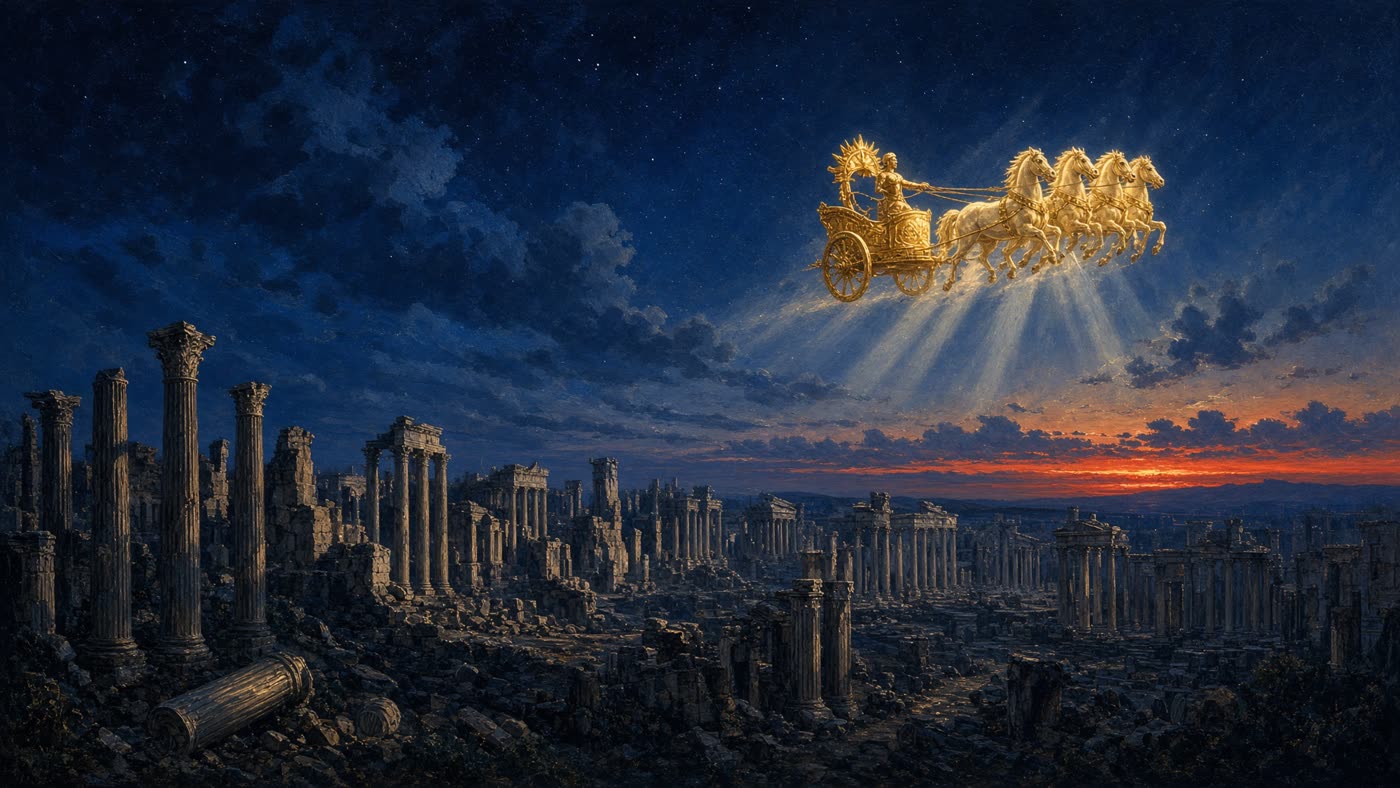
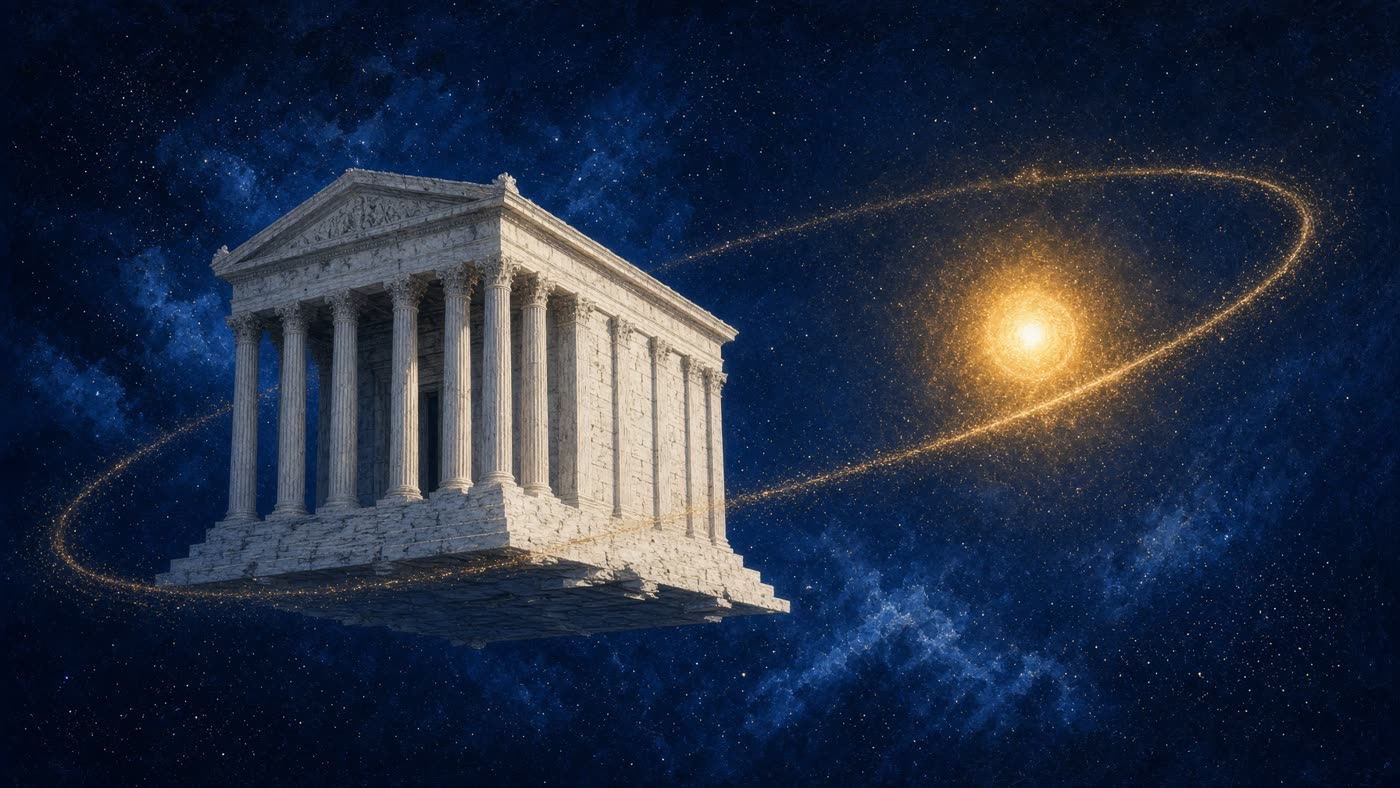
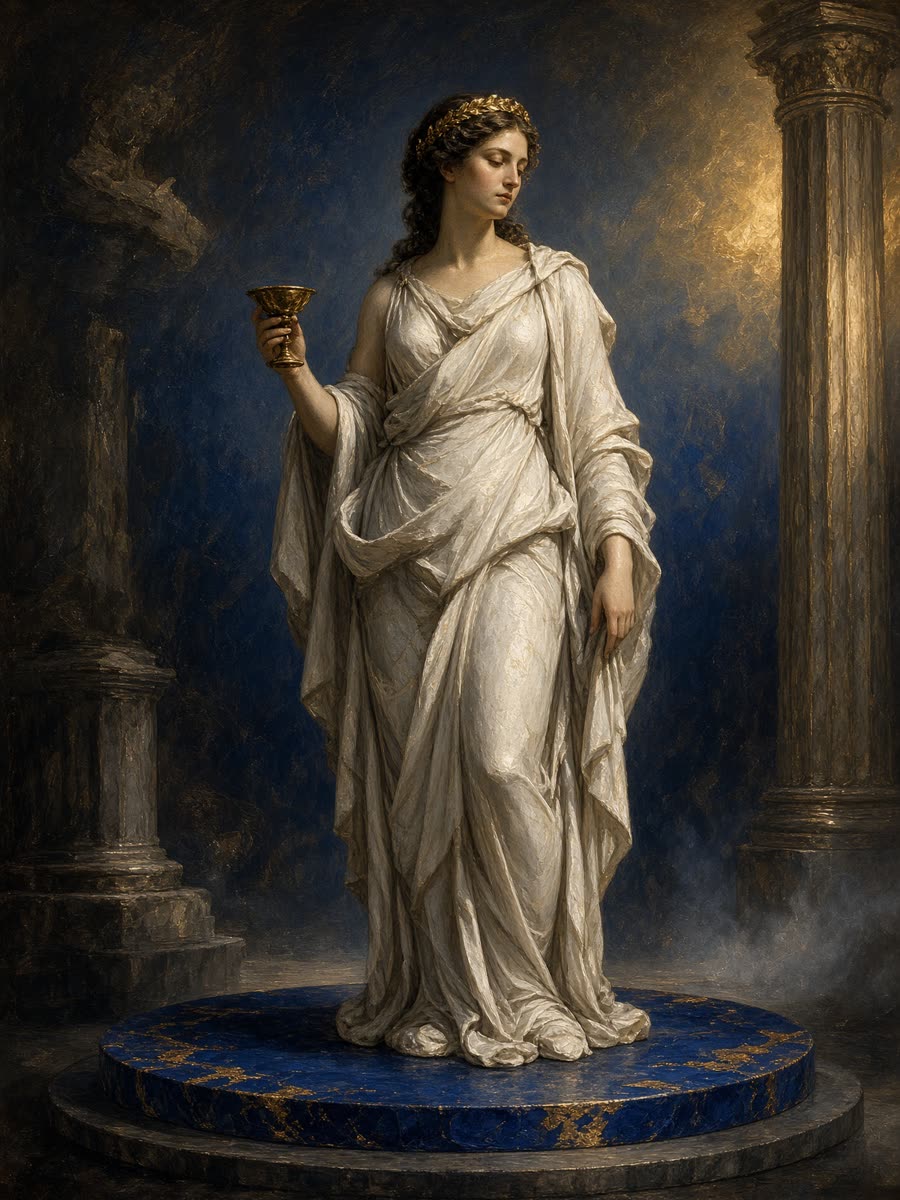
The moving picture behind these pages is a drawing: a gate of circles, a marble eagle, five glass solids, a sun-chariot, Virgo with Spica bright, ten stars, and flow-lines for Laniakea. It is not a photograph and not a measurement. You are here, in the Milky Way, inside the Virgo lobe of Laniakea. The measured distances are on the Ten Stars page. The stations above are concept art, and each one links to its page.
01
Novena.
Novena of the Light-Bringer, Oct 18–26, 2026. Nine days for an intention.
Open02
Mission.
Ten Stars, then galaxies. Keep your word. Keep the record.
Open03
Timeline.
From Göbekli Tepe to the Eternal City.
Open04
Ten Stars.
The ten nearest systems, with distances and planets.
Open05
Astraea.
The poets said the Virgin left. The Order says she returns by work, not on a date.
Open06
The Heir.
Phaethon is the myth of the son who learns the limit Phaethon lacked. The man remains a man.
Open07
Phaethon.
The heir of Helios learns the limit. The man under the myth remains a man.
Open08
Six Orders.
Minerva, Juno, Jupiter, Apollo, Phaethon, Venus.
Open09
Creed.
Two inheritances, stated with the churches’ own reading beside them, and the Athanasian Creed in full.
Open10
Doctrine.
Substratiation, with the limit written under it: he remains a man, and an unfalsifiable claim is not evidence.
Open11
Titles.
Honorific styles inside the Order. They grant no authority and no duty of obedience.
Open12
Rosary.
The traditional fifteen mysteries, and a separate Astraea Psalter.
Open13
Latin Mass.
How to follow a Mass at a real altar. This Order never stages one.
Open14
Calendar.
The feast, then the Order’s archetype beside it. Never instead of it.
Open15
The Eternal City.
Learn the machines. Build them. Know how they differ from a brain.
Open16
Space.
A verified table of the near stars, dated 2026-10-07.
Open17
Simulation and quantum.
What the experiments show, and what is still only a claim.
Open18
Rights.
Ten articles. Critique ideas, never people. Leave in one sentence.
Open19
Book of Facts.
Every FACT on this site, with a source.
Open20
Join.
Join free as a Friend, 18+. A short Google Form; a person replies.
Open21
Exit.
I am leaving Helian Way.
Open